In an era defined by rapid digital transformation, safeguarding information systems is paramount for organizations in Nepal. With cyber threats such as data breaches and ransomware on the rise, Information System (IS) audits are critical for ensuring the security, efficiency, and compliance of IT infrastructure. This article provides an authoritative overview of the legal frameworks governing IS audits in Nepal, their significance, and practical guidance for organizations to achieve compliance and resilience in the digital landscape.

Understanding IS Audits
An IS audit is a systematic evaluation of an organization’s IT systems, encompassing hardware, software, networks, and data management practices. It assesses whether these systems effectively protect assets, ensure data integrity, and support organizational objectives. Beyond technical components, IS audits scrutinize policies and procedures to verify compliance with regulatory standards, making them indispensable for both cybersecurity and governance.
The Importance of IS Audits in Nepal
Nepal’s digital economy is expanding rapidly, with businesses across various sectors increasingly relying on technology. However, this growth amplifies cybersecurity risks, as evidenced by rising incidents of phishing, data breaches, and ransomware affecting public and private entities. IS audits enable organizations to :
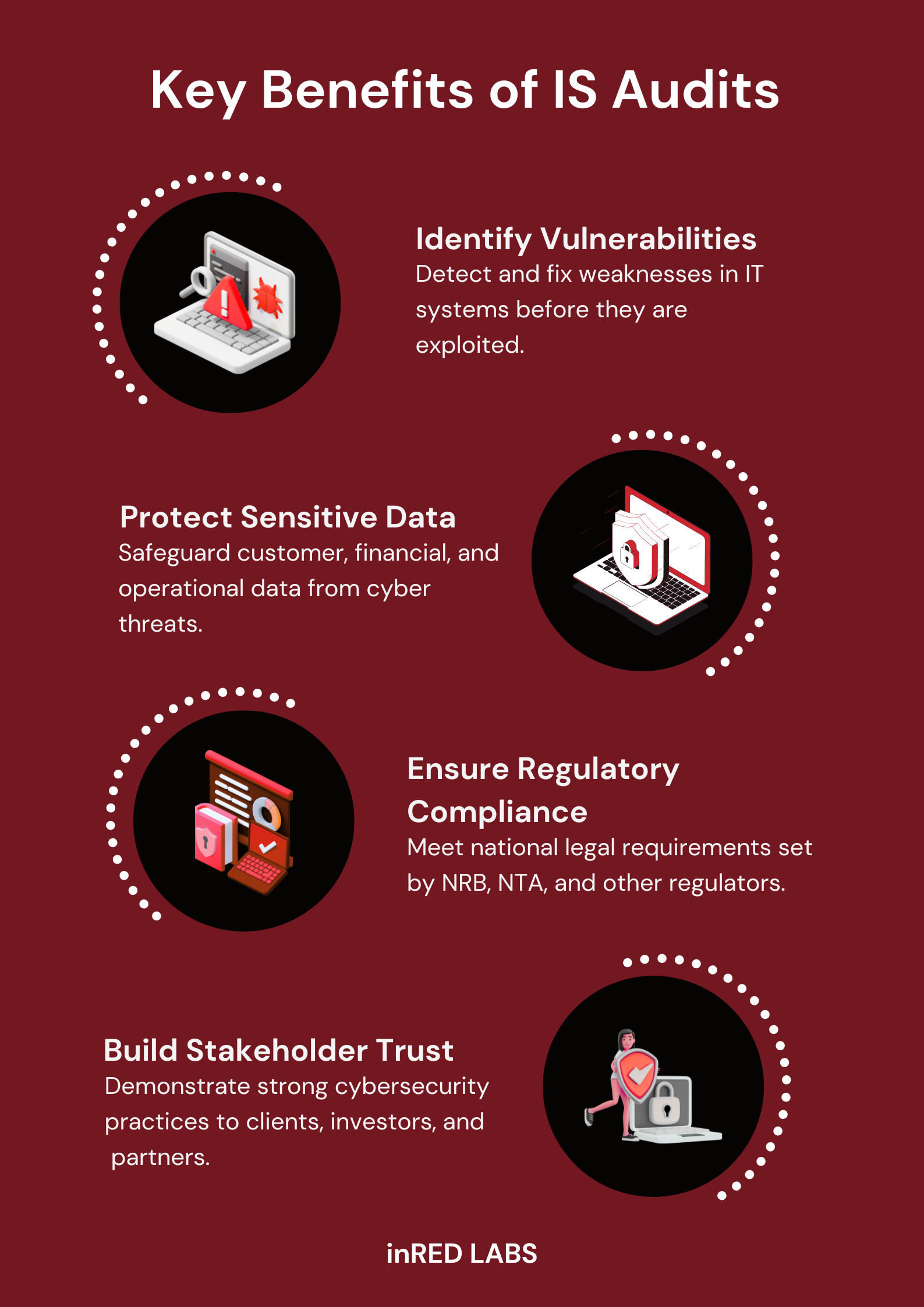
Identify and mitigate vulnerabilities in IT systems.
Ensure adherence to national regulatory requirements.
Protect sensitive data, including customer and financial information.
Enhance stakeholder confidence through robust cybersecurity practices.
For regulated sectors such as banking and telecommunications, IS audits are a mandatory requirement, underscoring their critical role in Nepal’s digital ecosystem.
Legal and Regulatory Framework for IS Audits
Several laws and regulations govern IS audits in Nepal, particularly for organizations managing sensitive data. Below is a concise summary of the key frameworks:
Nepal Rastra Bank’s IT Policy and Guidelines (2012)
Mandates regular IS audits for banks and financial institutions to ensure IT system security and integrity. Annual risk assessments are required, with external audits recommended when in-house expertise is limited.
Cyber Security Byelaw, 2020 (Nepal Telecommunications Authority)
Requires telecommunications providers and NTA-regulated entities to conduct IS audits by certified professionals listed on a government-approved roster.
Bank and Financial Institution Act (BAFIA), 2073 (2017)
Reinforces IS audit obligations for the financial sector, aligning with international standards such as ISO 27001 and PCI-DSS for payment systems.
Companies Act, 2063 (2006)
Incorporates IS audits within broader compliance requirements for registered companies, focusing on IT control mechanisms.
Electronic Transactions Act, 2063 (2006)
Establishes standards for data protection and cybersecurity, indirectly supporting IS audits to ensure secure IT practices.
Compliance Requirements
Information System Audits are mandatory for:
Banks and financial institutions, as stipulated by NRB and BAFIA regulations.
Telecommunications providers and entities regulated by the NTA.
Public and private limited companies handling sensitive data.
Organizations outside these sectors are encouraged to undertake voluntary IS audits to proactively address cyber threats, enhance operational efficiency, and prepare for evolving regulations. For clarity on compliance obligations, consulting a certified IS auditor or legal expert is advisable.
IS Audit Process
The IS audit process is structured to ensure thorough evaluation and actionable outcomes. Key stages include:
Planning: Defining the audit’s scope and objectives, prioritizing high-risk areas.
Risk Assessment: Identifying potential threats to IT systems.
Control Testing: Evaluating the effectiveness of IT controls, such as access management and encryption.
Evidence Gathering: Collecting data to verify compliance and security measures.
Reporting: Delivering a detailed report with findings and recommendations for improvement.
Audits may be conducted internally or by external professionals. In Nepal, many organizations rely on external auditors due to limited in-house expertise. Regulated sectors require annual audits, with more frequent internal reviews recommended for larger entities.
Future Trends in IS Audit Regulations
As Nepal’s digital landscape evolves, IS audit regulations are expected to become more stringent. Anticipated developments include:
Expanded mandates to cover additional sectors.
Greater adoption of international standards, such as ISO 27001.
Strengthened oversight and penalties for non-compliance.
Proactive adoption of IS audits will position organizations to meet these future requirements seamlessly.
Conclusion
Information System audits are a cornerstone of Nepal’s regulatory framework, particularly for the financial, telecommunications, and data-sensitive sectors. By aligning with legal requirements and prioritizing regular audits, organizations can mitigate cyber risks, ensure compliance, and thrive in Nepal’s growing digital economy.
FAQs
What is an Information System (IS) Audit?
An IS audit is a review of a company’s computers and software to make sure they are working correctly and safely. It helps keep important information protected from problems. This keeps the company’s data safe and follows the rules.
Why is an IS audit important for businesses in Nepal?
Because cyberattacks like data theft and ransomware are increasing, IS audits help businesses in Nepal find risks and make their systems safer. They also make sure the business follows important laws. This shows customers and partners that the company cares about protecting their information.
Which types of companies in Nepal need an IS audit?
Banks, finance firms, and telecom companies need IS audits because they deal with a lot of sensitive information. But any business that depends on IT systems should consider getting audits regularly to protect itself.
Is an IS audit the same as a financial audit?
No, a financial audit is all about checking the money and financial records. An IS audit is about making sure the IT systems and security are working correctly. Both are important to keep the business running well and following the laws.
Can small businesses in Nepal benefit from IS audits?
Absolutely! Hackers sometimes target small businesses because their security isn’t always strong. Doing an IS audit helps identify vulnerabilities and shows how to fix them, even if you don’t have a lot of money to spend.
What happens if we don’t conduct an IS audit?
If you don’t do an IS audit, you might miss big problems like weak passwords or old software. That can lead to losing important data, money, or even legal trouble, especially if your business has strict rules.
How do I know if my organization is ready for an IS audit?
Any business using computers, the internet, or digital data should think about getting an IS audit. If you’re unsure, a quick chat with an audit expert can help you decide if now’s the right time.
Is an IS audit expensive?
IS audits aren’t always expensive. The price depends on how big your company is and how detailed the audit needs to be. Lots of companies in Nepal offer customized IS audits that work for both small and big budgets. Protecting your data is usually worth the cost.